Sports Massage for MMA Fighters: How It Helps Recovery
Approx 5-min read
How striking, grappling and fight conditioning load the body — plus a five-minute mobility reset for fighters
After a hard MMA session, “What hurts?” is not always an easy question to answer.
Your neck is stiff from clinch work. Your forearms are cooked from gripping. Your hips feel restricted after kicking and sprawling. Your calves are heavy from footwork — and tomorrow’s training is already on the schedule.
This whole-body fatigue is something I regularly see among combat-sport athletes. The problem is not always one identifiable injury. Often, it is the accumulated load of striking, grappling, conditioning and strength work without enough opportunity to recover between sessions.
Can sports massage help MMA recovery?
The short answer is yes — when it is used for the right reason and at the right time.
Sports massage and soft-tissue therapy may help reduce post-training soreness, improve flexibility and make restricted movement feel more comfortable. Treatment can also help identify where load is building before it begins to affect technique or the next training session.
It is not a substitute for sleep, nutrition or sensible programming, and it cannot repair a fracture, concussion or significant ligament injury. Think of treatment as one useful part of a wider recovery plan.
Why does MMA leave everything feeling tight?
MMA combines several very different physical demands:
Striking repeatedly loads the feet, calves, shins, knees and hips while the trunk produces and controls rotation. Holding a guard also creates sustained work through the shoulders and upper back.
Clinch work and grappling involve gripping, pulling, bracing and controlling another person in awkward positions. That can heavily load the neck, shoulders, forearms, elbows, ribs, hips and groin.
Conditioning and strength training add running, circuits and lifting on top of technical sessions and sparring.
One session may be manageable. The bigger issue is several hard days stacked together while the same areas remain sore, restricted or fatigued.
Common problem areas in fighters
Competition research understandably records dramatic injuries such as head trauma and fractures. Day-to-day training often produces a different picture.
Among fighters, grapplers and martial artists, the recurring load tends to appear around:
The neck, upper back and shoulders
The elbows, forearms, wrists and hands
The lower back, hips, groin and adductors
The knees, calves and ankles
Not every tight area is injured. However, consistently working around the same restriction can alter how you strike, shoot, defend or move on the mat.
Normal soreness or something that needs assessment?
General muscular soreness after unfamiliar or particularly hard training is common. It is usually spread across a broader area and gradually improves with rest and gentle movement.
Seek appropriate assessment if you experience sharply localised pain, significant swelling, instability, numbness, unusual weakness, pain at rest or symptoms that continue to worsen.
Any suspected concussion, fracture, dislocation or serious acute injury requires medical assessment—not deeper massage and another sparring session.
Try this five-minute fighter mobility reset
Often, it is the small things done consistently that make the biggest difference. Use these movements before training to prime the hips, upper back, ankles and wrists; repeat them afterwards to settle back into comfortable movement; or run through the full sequence on recovery days. Move slowly, stay within a comfortable range and prioritise control rather than forcing extra range. Used regularly, they can support mobility, movement quality and readiness for the next session.
1. 90/90 hip switches
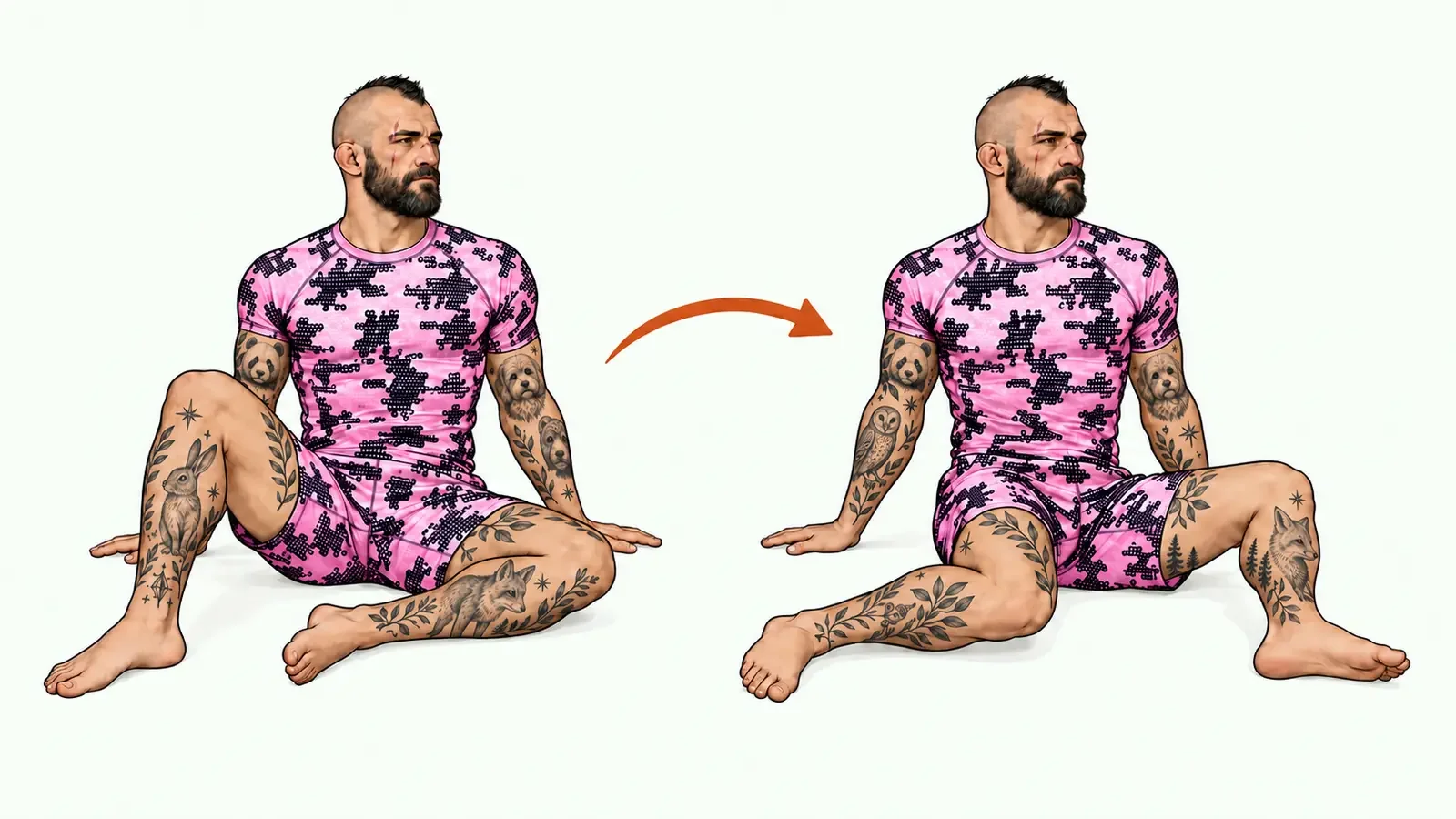
Sit with both knees bent and gently rotate them from side to side. Use your hands behind you if needed.
Complete ten controlled repetitions each way.
2. Adductor rock-backs
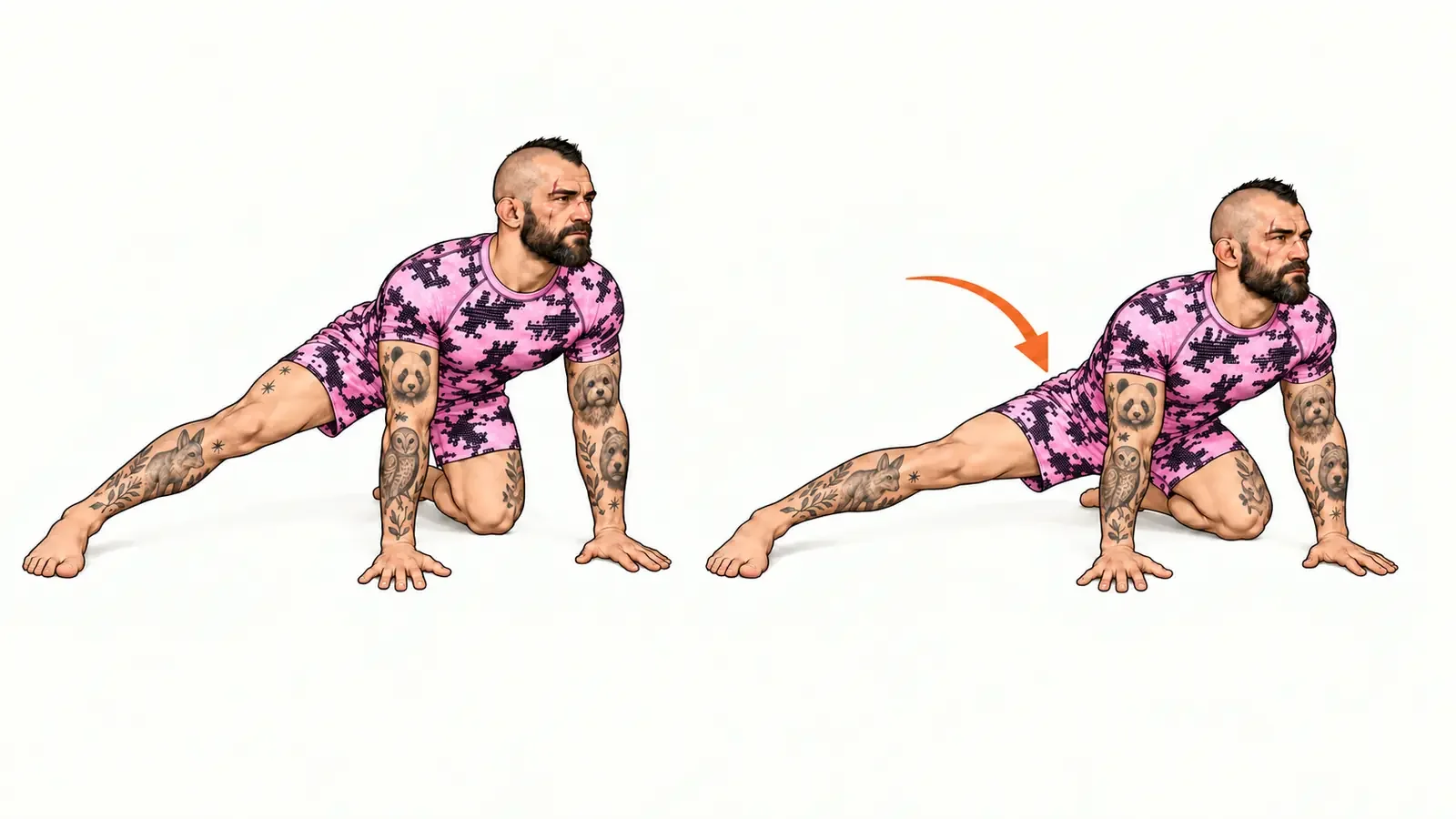
Begin on all fours, extend one leg out to the side and gently move your hips backwards while keeping your spine controlled.
Complete ten repetitions on each side.
3. Open-book rotations
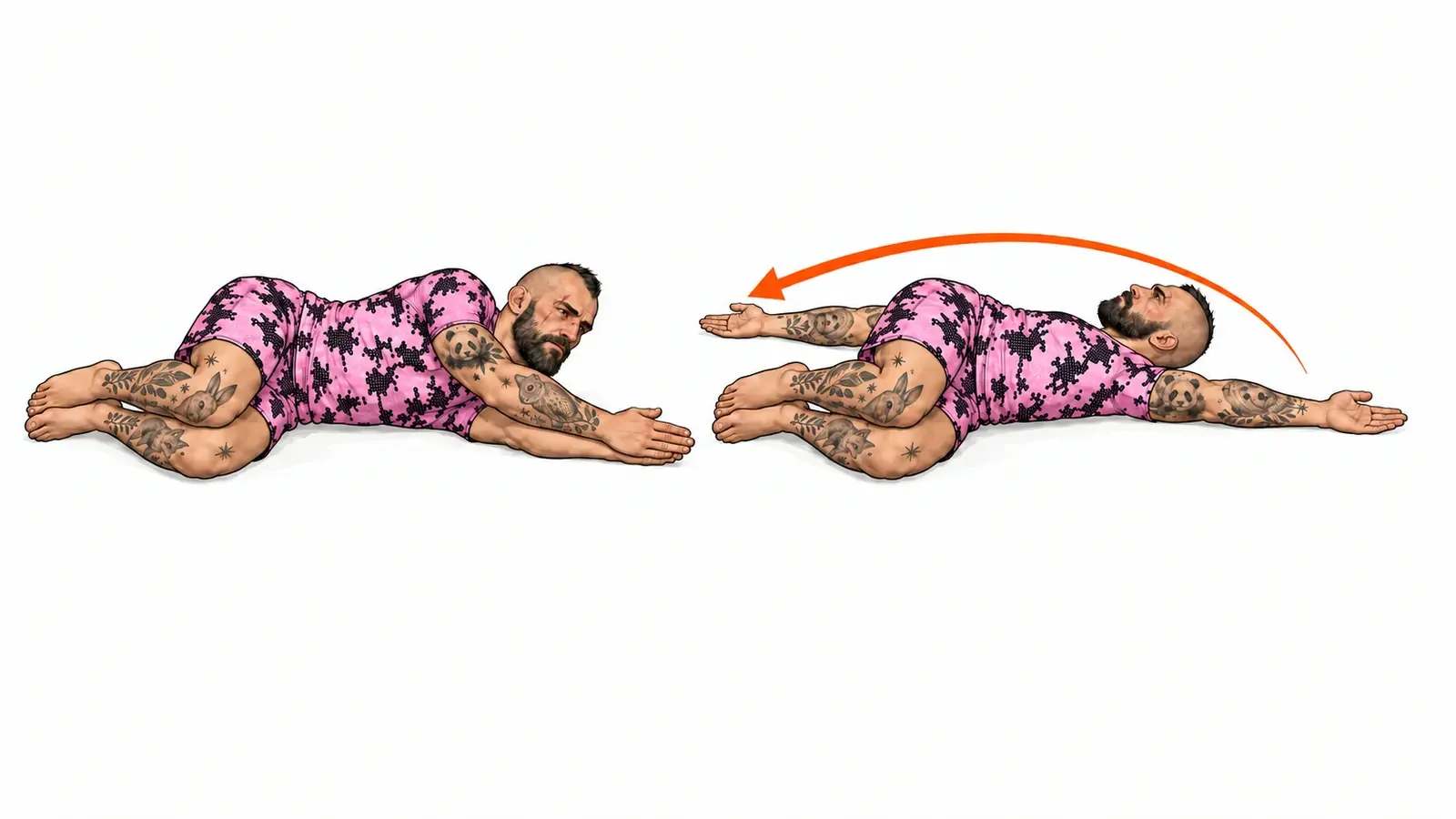
Lie on your side with your knees bent and stacked. Sweep the upper arm across your body and rotate through your upper back without allowing the knees to separate.
Complete ten repetitions on each side.
4. Knee-to-wall ankle rocks
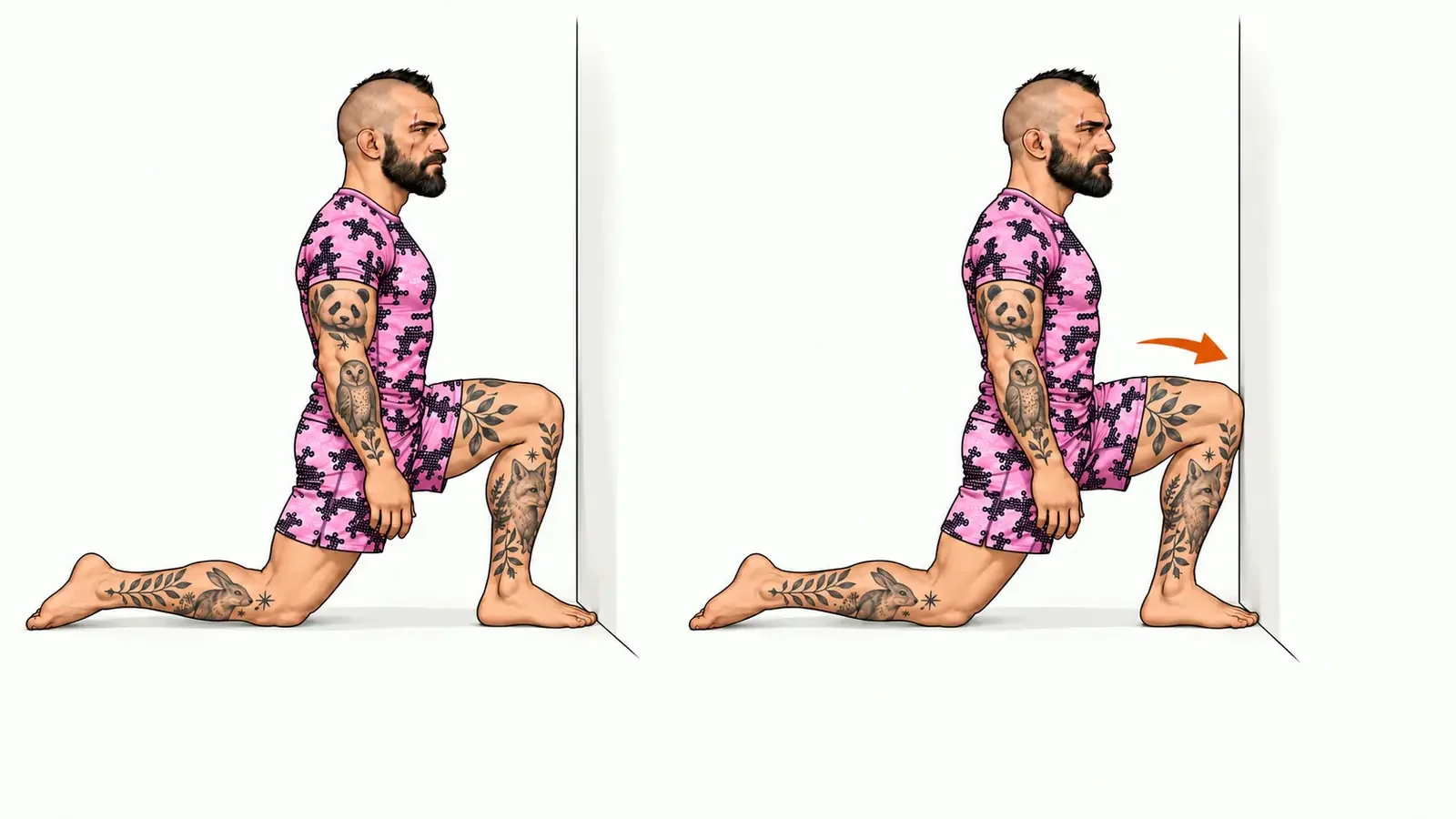
Keep the heel planted and slowly drive the knee forwards over the toes towards a wall.
Complete 20 repetitions on each side.
5. Gentle wrist rocks
On all fours, keep your palms down and gently shift your body forwards and backwards. Use only as much pressure as feels comfortable.
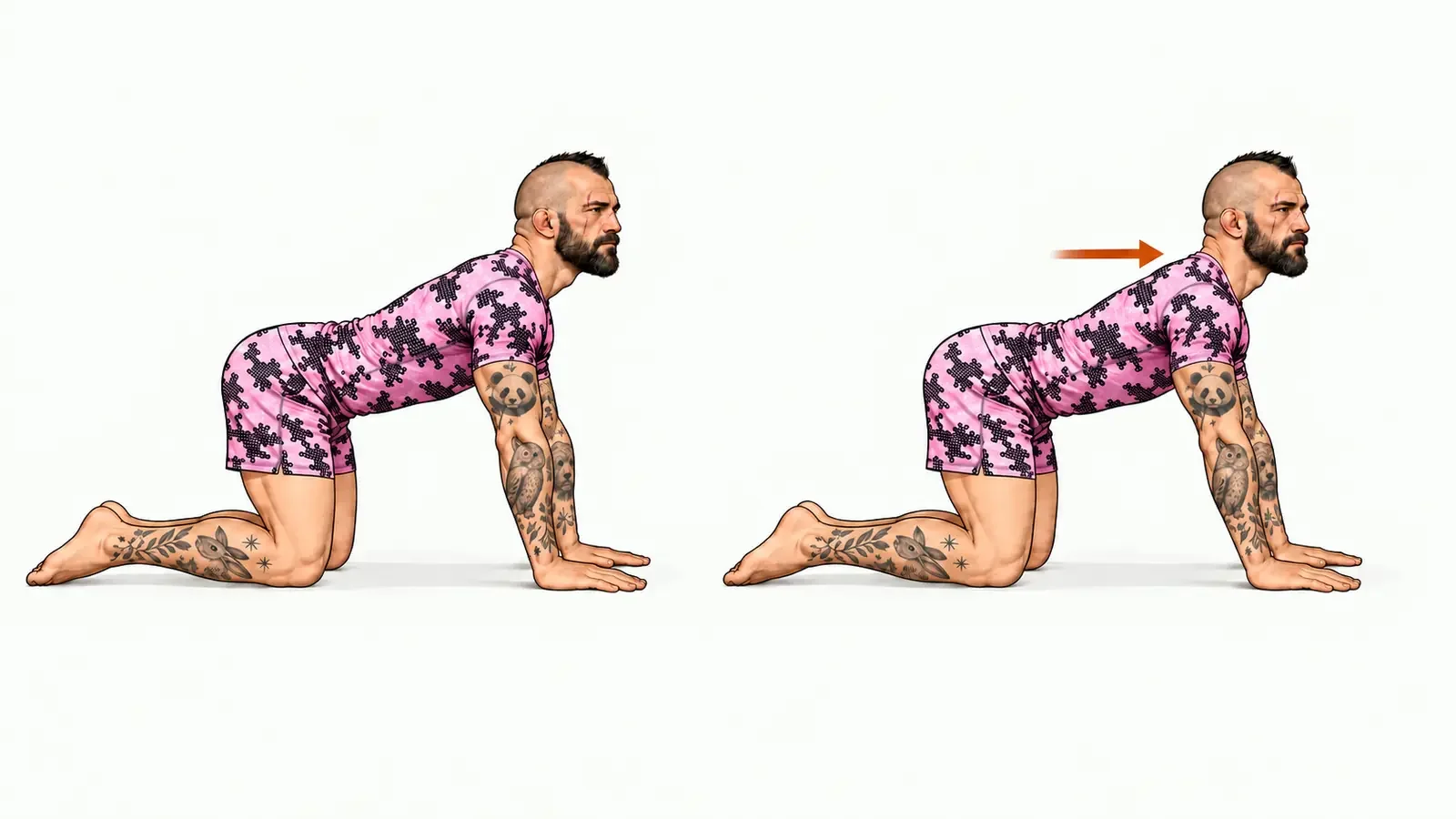
Complete ten slow repetitions.
These exercises should create movement or a mild stretch—not sharp pain, pinching or instability. They are general mobility drills rather than rehabilitation for a specific injury.
How we treat MMA and combat-sport athletes at Kinesis
There is no standard “fighter massage” at Kinesis Performance.
We begin by discussing your discipline, weekly training load, sparring schedule, previous injuries and when you next need to perform. We then assess the areas causing difficulty and how they relate to the wider movement pattern.
Treatment may include targeted sports massage, deeper soft-tissue work, assisted movement and dry needling where appropriate and agreed. Combat-sport research has reported encouraging results for manual therapy and dry needling around neck pain and stiffness, as well as dry needling applied to heavily loaded forearm and calf muscles.
Treatment intensity matters. A fighter returning to pads or sparring shortly afterwards may need a lighter recovery session. More focused deep-tissue work or dry needling is better placed when there is sufficient time before the next demanding session.
You will also leave with a small number of relevant home-care movements — not an unrealistic list of exercises that never gets done.
Do not wait until you cannot train
You do not have to be injured — or stop training completely — to benefit from treatment.
If tightness, soreness or restricted movement is beginning to affect your striking, grappling or recovery, book an Initial Assessment & Treatment at Kinesis Performance in Welwyn Garden City.
Kinesis also provides sports massage during selected sessions at Watford Tactical Fighting in Hemel Hempstead. It is an open, beginner-friendly combat-sports gym with a strong community, and new fighters are always welcome — whether you are an experienced competitor or considering stepping onto the mats for the first time.
References
Lystad RP, Gregory K, Wilson J. The Epidemiology of Injuries in Mixed Martial Arts. Orthopaedic Journal of Sports Medicine. 2014.
Nicolini AP et al. Epidemiology of Orthopaedic Injuries in Jiu-Jitsu Athletes. Acta Ortopédica Brasileira. 2021.
Doherty CS et al. Incidence of Health Problems in Australian Mixed Martial Arts and Muay Thai Competitors: A 14-Month Study of 26 Combat Sports Events. Sports Medicine–Open. 2025.
Davis HL et al. Effect of Sports Massage on Performance and Recovery: A Systematic Review and Meta-Analysis. BMJ Open Sport & Exercise Medicine. 2020.
Trybulski R et al. Postexercise Physical Recovery Methods for Combat Sports: A Scoping Review. International Journal of Sports Medicine. 2026.
Trybulski R et al. Biomechanical Profile after Dry Needling in Mixed Martial Arts. International Journal of Sports Medicine. 2024.
Combination of Manual Therapy and Dry Needling Effectively Improves Acute Neck Pain and Muscular Tone and Stiffness in Combat Sports Athletes: A Randomized Controlled Study. Journal of Sports Science and Medicine. 2024.